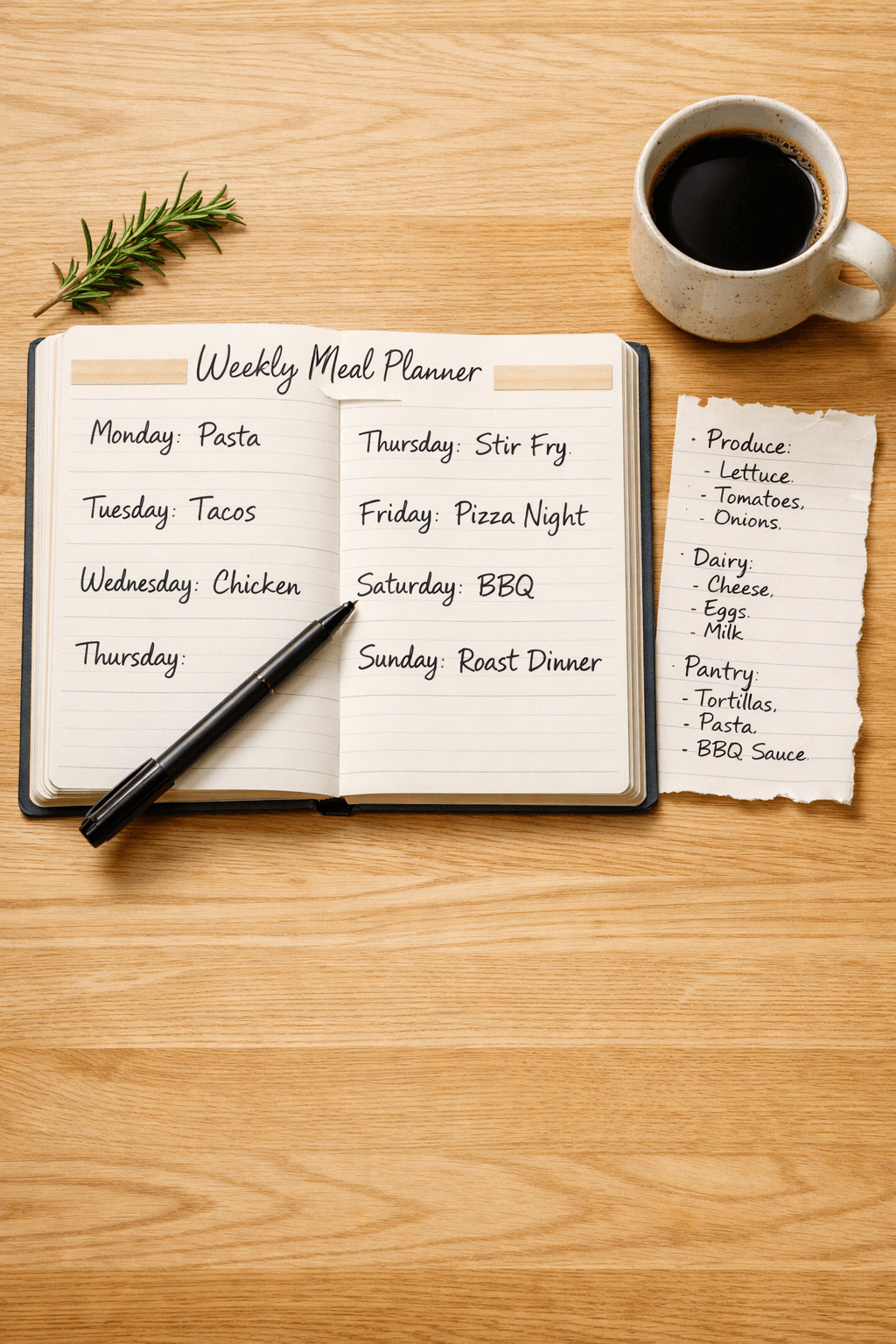
Meals for Picky Families: How to Plan a Week of Dinners Everyone Will Actually Agree On
Planning a week of dinners for a family with different tastes isn't a cooking problem. It's a negotiation problem — and most families are trying to solve it at the wrong moment, standing in the kitchen at 6pm with a hungry audience and no good options. This guide lays out a system for getting everyone on board before you cook a single thing, so weeknight dinner stops feeling like a referendum you didn't know you were running.
Why Dinner Arguments Happen (It's Not About the Food)
Picture this: it's Monday. You planned chicken stir-fry. Your 8-year-old announces she hates stir-fry now (she loved it three weeks ago). Your partner says "whatever you want" — which, as you well know, means he will absolutely have opinions once the food is on the table. You pivot to pasta. Your teenager, who announced last month she's vegetarian, is fine with pasta but wants to know if the sauce has meat. It does. You order pizza.
The food wasn't the problem. The timing was.
Dinner decisions made under pressure — when people are hungry, tired, and standing in the kitchen — almost always go sideways. Someone feels like their preferences weren't considered. Someone else feels like they're the only one doing the thinking. The "I don't care" partner cares. The picky kid digs in. And the person who planned the meal feels like they did all that work for nothing.
What's actually missing isn't a better recipe. It's a process that gets everyone's input earlier, when the stakes are lower and the conversation is easier.
Why the Usual Fixes Don't Stick
Most families try one of a few things. They rotate through the same five "safe" dinners everyone tolerates — which works until it doesn't, usually around week three when even the kids are bored of taco Tuesday. Or they ask the family for input ("what do you want this week?") and get back a wall of silence followed by competing, incompatible requests. Or they find a new recipe they're genuinely excited about, cook it on a Wednesday, and watch it land with a thud.
The ask-everyone approach fails because it puts the planning burden on one person and the veto power on everyone else. That's not collaboration — it's a trap.
The safe-dinner rotation fails because "family friendly meals" shouldn't mean meals everyone merely tolerates. Tolerance isn't buy-in.
And the exciting-new-recipe approach fails because surprise is actually a liability with picky eaters. What I've found works much better is giving people a preview — letting them say yes before you commit to cooking something, not after.
The Buy-In-First System
Here's the shift: instead of deciding what's for dinner and then hoping everyone accepts it, you present a shortlist of options and let the family pick.
Not an open-ended "what do you want?" — that question produces nothing useful. A constrained choice between real options you'd actually cook. Think of it like a restaurant menu. Nobody hands you a blank page and says "order whatever." They give you twelve things, and you pick one.
In practice, this looks like generating a pool of five to seven dinner ideas for the week — a mix of familiar favorites and one or two new options — and sending them to your family to vote on before the week starts. The meals that get the most votes make the plan. The ones that don't get cut.
This does a few important things. It makes everyone feel heard, because they had a real say. It removes the "I didn't ask for this" objection at the table, because they literally approved it. And it keeps the planning burden from landing entirely on one person, because the decision gets distributed.
The exception is households with very young kids (under five or so) — they're not reliable voters. But even then, getting a partner or older sibling to weigh in takes some of the guesswork out.
What This Looks Like in a Real Week
Say you're planning Sunday through Thursday. You put together a list of eight dinner ideas — things like sheet pan salmon, turkey tacos, a pasta bake, slow cooker pulled chicken, and a veggie fried rice. You share the list with your family Saturday morning. By Saturday evening, you've got enough votes to see that tacos, pasta bake, and the pulled chicken are the clear winners. You add one more from the list to round out the week, build your shopping list around those four meals, and you're done.
Tuesday night after soccer practice, pulled chicken goes in the slow cooker before you leave. Your 8-year-old already knows it's on the menu — she voted for it. Your teenager knows it's not a meat-heavy dish she'll have to work around. Your partner isn't surprised. Nobody's negotiating at 6:45pm.
That's the difference. Not a better recipe. A better process.
For families with a dietary split — say, one person is gluten-free and another isn't — the voting pool can include meals that naturally work for everyone, or meals where a small modification handles the difference. A taco night where the gluten-free person gets corn tortillas isn't a hardship. It just needs to be planned for, not improvised.
When Your Family Is Especially Hard to Please
Some households are genuinely harder to plan for. A teenager who just went vegetarian. A partner who eats anything but has strong opinions about texture. A kid who will only eat five things and two of them are beige.
A few things that actually help:
Build in one "safe" meal per week. Every dinner rotation should have at least one meal that's a known quantity — something everyone reliably eats without complaint. This isn't admitting defeat. It's giving yourself a buffer night so you're not gambling every single evening.
Separate "new" from "different." Picky eaters often aren't opposed to new flavors — they're opposed to surprise. A meal they voted on in advance, even one they've never had, lands differently than something that appears on the table unannounced.
Let the "I don't care" partner vote anyway. They care more than they're letting on. Giving them a concrete list to react to (rather than an open question) usually produces an actual opinion. "Do you want tacos or pasta this week?" gets an answer. "What do you want for dinner?" does not.
The goal isn't a week of dinners everyone loves equally. That's not realistic. The goal is a week where nobody feels ambushed, the cook doesn't feel invisible, and dinner is something the family actually shows up for.
Slated: Your whole week of dinners, planned in minutes. Personalized meal plans, family voting, and one-tap Instacart ordering.
Try it free for 14 days
Get Slated for iOSNo credit card required
You might also like

Dinner Ideas for Picky Eaters: A Family Planning System That Gives Everyone a Vote
Tired of being the family short-order cook? This guide shows you a dinner planning system that handles picky eaters without nightly negotiations.

How to Get Your Family to Agree on Dinner Before You Cook (No More Last-Minute Arguments)
Stop cooking meals your family complains about. This buy-in strategy gets everyone to agree on dinner before you start cooking—ending mealtime arguments for good.

HelloFresh Alternative: What to Do Instead for Weekly Family Dinners
Tired of meal kit boxes that don't fit your family? Here's the plan-based HelloFresh alternative that actually works for real family dinners.