5 Ways Meal Planning at Home Beats HelloFresh — Flexibility, Taste, and Family Buy-In
The box shows up. You're relieved for about four days. Then week three hits and you've got a Tuesday night after soccer practice, two kids who've suddenly decided they hate salmon, and a HelloFresh bag sitting on the counter with a 45-minute Thai curry you have zero interest in making. Sound familiar?
Meal kits solve one problem — "what's for dinner" — but they create a handful of others. Here's what I've found works better for most families, and why meal planning at home consistently wins on the things that actually matter day to day.
1. You're Not Locked Into Someone Else's Menu
HelloFresh picks the recipes. You pick from their picks. That's a meaningful distinction, and it's where the model starts to crack for families with any real dietary complexity — a kid who won't touch mushrooms, a partner who's gluten-free, a household that's been eating Indian food on repeat lately because everyone's obsessed with it.
When you plan at home, you're building around what your family actually eats. Not a curated selection of what a meal kit company thinks families eat. If your household is deep into Korean food right now, your week can reflect that. If your 8-year-old has a wheat allergy, that's not an asterisk — it's the starting point. The menu bends to you, not the other way around.
2. The Per-Serving Math Gets Uncomfortable Fast
Meal kits aren't cheap. Most families know this, but it's easy to rationalize when the box is convenient. What's harder to rationalize is when you realize you're paying meal-kit prices for a recipe you could have planned yourself — using ingredients you already understand, from a store you already shop at, scaled to exactly how many people are eating that night.
At home, you're not paying for packaging, portioning, or the logistics of getting pre-measured parsley to your door. You buy what you need. If you've already got half a bag of spinach and some chicken thighs in the fridge, those become dinner — not waste. That's a kind of flexibility meal kits structurally can't offer.
3. Flexibility When Life Doesn't Go to Plan
Here's an honest truth about meal kits: they assume your week goes as scheduled. But families don't work that way.
Thursday's dinner gets cancelled because you're eating at your in-laws. Saturday's recipe requires 50 minutes and you have 20. The fish kit arrives on Wednesday and you're not cooking fish until Friday — now you're watching the freshness clock. Meal kits are rigid in a way that looks flexible on the surface (you chose the recipes!) but isn't in practice.
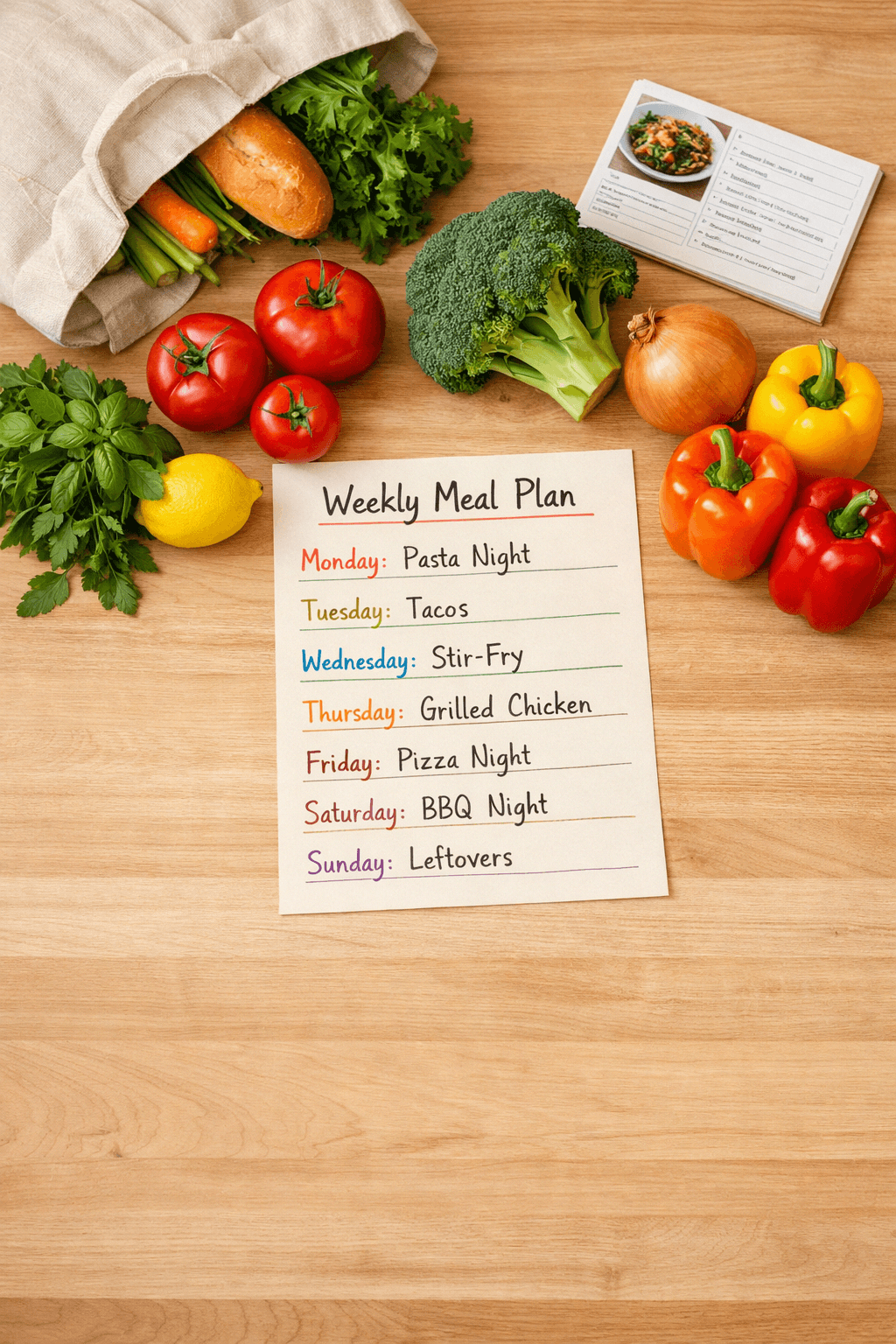
Planning at home means you can swap Tuesday and Thursday without consequence. You can drop a night entirely if something comes up. You can pull in a quick pasta because it's been a long week and nobody wants the elaborate thing. After trying both approaches, the ability to adjust on the fly — without guilt, without waste, without a box of wilting herbs — is the biggest practical difference.
4. Your Family Actually Gets a Vote
One of the underrated problems with meal kits is that the family doesn't choose the food — one person does, at subscription time, from a limited menu. That's a recipe (no pun intended) for a 10-year-old who's checked out before the plate hits the table.
When you plan meals at home, you can actually involve the people who are going to eat them. Ask everyone to name one dinner they want this week. Let the kids vote on two options for Thursday. Make it a five-minute conversation on Sunday instead of a unilateral decision. Families that eat meals they had some hand in choosing are — in my experience — significantly more cooperative at dinner, even when the food is new or unfamiliar. That buy-in is real, and meal kits skip it entirely.
5. You Build Meals Around Cuisines You Love, Not Cuisines They Offer
HelloFresh rotates through a set menu. Some weeks there's great variety; some weeks everything looks the same. If your family loves Thai food, you might get it once a month. If you're into Ethiopian or Caribbean cooking, you might be waiting a while.
Planning at home means your cuisine preferences are the baseline, not the exception. You want three Mexican dinners this week and one Japanese? Done. You want to stay in Mediterranean territory for the next two weeks because everyone's on a kick? Easy. There's no menu to negotiate with — just your family's actual tastes, which turns out to be a pretty good guide for what gets eaten without complaint.
The meal kit model made sense when dinner planning felt completely overwhelming and there were no good alternatives. That's less true now. Planning at home — especially with the right tools — can give you the same "I don't have to think about this" relief that drew you to meal kits in the first place, without the rigidity, the packaging, or the feeling that you're cooking someone else's idea of dinner.
The families who make the switch don't usually go back. And honestly, the biggest thing they say they gained isn't time or money — it's that dinner stopped feeling like a compromise.
Slated: Your whole week of dinners, planned in minutes. Personalized meal plans, family voting, and one-tap Instacart ordering.
Try it free for 14 days
Get Slated for iOSNo credit card required
You might also like
Meal Plan with Grocery List: How to Plan a Full Week of Dinners and Send It Straight to Instacart
Learn how to build a full week of dinners with a ready-to-shop grocery list — and send it straight to Instacart in one tap. No more Sunday scramble.
5 Things Your Meal Kit Will Never Do — Why Families Are Switching to Custom Meal Planning
Looking for a HelloFresh alternative? Here are 5 things meal kits simply can't do — and why custom meal planning works better for real families.

7 Reasons Families Are Quitting Meal Kits — And What They're Doing Instead
Tired of HelloFresh? You're not alone. Here are 7 real reasons families are canceling meal kits — and the meal kit alternative that actually works.