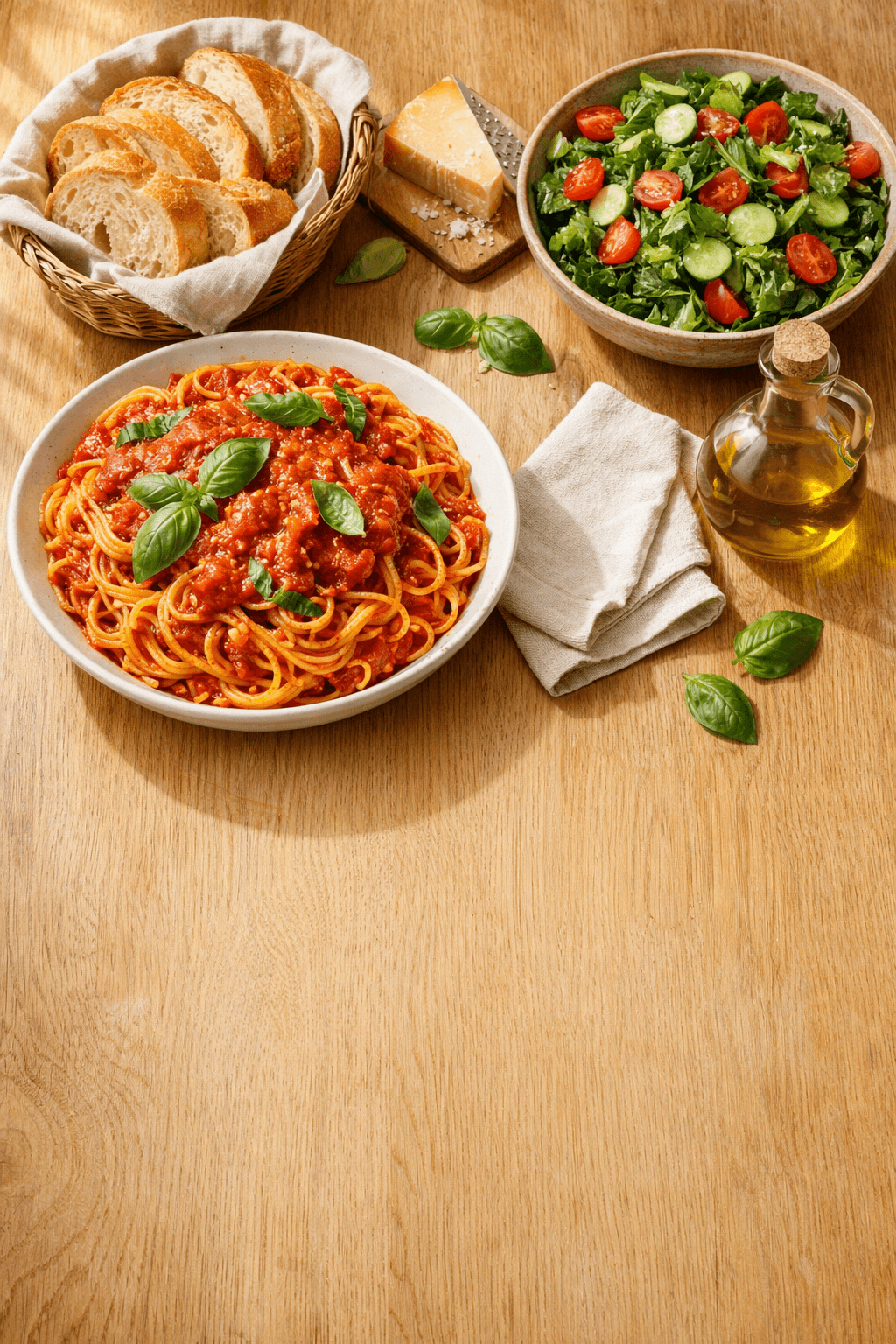
Family Friendly Meals Without the Drama: How to Stop Being the Short-Order Cook
You planned chicken thighs. Your 8-year-old wants plain pasta. Your partner says "whatever you want" — which, as you've learned, means nothing of the sort. By 6:30pm you've made three different things, eaten standing over the sink, and quietly promised yourself you'll figure out a better system. Tomorrow.
The problem isn't your cooking. It's that you're the only one who had any say in what was happening at dinner. This guide is about fixing that — not with a new set of recipes, but with a different approach to how dinner decisions get made in your house.
The Real Cost of Being the Default Dinner Planner
Here's what the short-order cook trap actually looks like: you spend mental energy all day thinking about what to make, you buy the ingredients, you cook it — and then someone at the table makes a face. Or worse, says nothing and eats cereal an hour later.
It's not just the extra cooking. It's the invisible weight of being the only person who cares whether dinner happens at all. Your partner didn't veto the chicken; they just never knew there was a vote. Your kids didn't ask for pasta to be difficult; they asked because nobody told them something else was coming.
The frustration builds because the system is broken, not because your family is. When one person owns every dinner decision solo, resentment is basically built into the process.
And the stakes feel low enough that nobody else steps in — until they don't, and suddenly you're fielding complaints about a meal you spent 45 minutes making on a Tuesday night after soccer practice.
Why the Obvious Fixes Don't Stick
Most people try one of three things. They ask the family what they want for dinner (which produces either silence or a three-way argument). They rotate through the same five "safe" meals everyone tolerates (which works until it doesn't, around week three). Or they try a meal kit service, which solves the recipe problem but doesn't solve the buy-in problem — you're still the one deciding what arrives in the box.
What I've found is that the issue isn't a lack of good dinner ideas. There are plenty of family friendly meals out there. The issue is that everyone else at the table had zero input, so they feel zero ownership over what's on their plate.
Asking "what do you want for dinner?" on the day of is also too late. By then, you need an answer fast, and nobody's in a decision-making mood. The conversation turns into a negotiation you didn't have time for, and you end up defaulting to whatever's easiest — which is usually whatever you were already planning to make anyway.
The System: Get Buy-In Before You Cook
The fix isn't asking your family what they want. It's showing them a set of options and letting them choose from those.
This is a meaningful distinction. When you ask an open-ended question, you're inviting chaos. When you present a curated shortlist of meals you'd actually be willing to make, you're running a structured vote — and whoever participates owns the outcome.
Here's how it works in practice:
Step 1: Build a shortlist of 8-10 dinners for the week. These should be meals you're genuinely willing to cook — not aspirational recipes you'll bail on by Wednesday. Think about your actual week: two nights that need to be 28 minutes or less, one night with enough flexibility to try something new, a couple of reliable fallbacks.
Step 2: Send the list to your family before the week starts. Sunday afternoon works well. Everyone votes on their favorites — thumbs up, thumbs down, whatever system makes sense. Kids can participate. Partners who claim not to care suddenly have opinions when there's a list in front of them.
Step 3: Build the week around the top picks. You're still in control of the logistics — what gets made when, how it fits the schedule — but the choices reflect everyone's input. Nobody can complain about Tuesday's dinner when they voted for it on Sunday.
The key detail: you're not taking requests. You're running an election with candidates you selected. That's a completely different dynamic.
What a Real Week Looks Like
Say it's Sunday. You've got a rough sense of the week — Wednesday is packed, Friday feels like a flex night, and you've got a pound of ground turkey that needs to get used.
You put together a list of nine options: turkey tacos, a sheet pan chicken situation, pasta with sausage and peppers, a Thai-ish noodle bowl, homemade burgers, a simple stir-fry, a slow cooker soup, quesadillas, and salmon with roasted vegetables. Variety of effort levels, a couple of cuisine types, something for everyone's general preferences.
Your partner picks four. Your 11-year-old picks three (two of which overlap with your partner's). Your 8-year-old picks the quesadillas and the tacos and tries to vote for cereal, which you ignore.
From that, you build five nights: tacos Tuesday, pasta Thursday (crowd favorite), chicken on Monday, stir-fry Wednesday because it's fast, and burgers Friday. The turkey goes into the tacos. The shopping list basically writes itself.
Nobody chose the salmon — fair enough, that one's for next week. But here's what changed: when Thursday's pasta hits the table, your 8-year-old helped pick it. That's not nothing.
When Your Family Has Competing Needs
The voting system works even when your family's dietary situation is complicated — it just requires a bit more thought upfront when you're building the shortlist.
If you've got a newly vegetarian teenager (announced on a Sunday, naturally) alongside a partner who considers chicken a food group, the goal isn't to find one meal that perfectly satisfies both. It's to find meals where both people can eat well. A taco night where the protein is customizable. A grain bowl where the toppings are modular. Pasta where you can split the protein add-in.
Your shortlist should include meals that have natural flexibility built in — not because you're trying to accommodate everyone at once, but because those meals tend to win votes across the board anyway. What I've found works is thinking in terms of "base + toppings" or "shared sides + separate mains" rather than hunting for one magic recipe that pleases everyone.
The "I don't care" partner is a separate challenge. Some people genuinely won't engage with a list until you frame it as a quick yes/no rather than an active choice. Text them two options. That's it. Two. Most people can answer that.
The short-order cook trap is a systems problem, not a cooking problem. Once your family has a voice in the dinner rotation — even a structured, curated voice — the dynamic shifts. Complaints drop. Participation goes up. And you stop spending mental energy on decisions that your family was always capable of helping you make.
Slated: Your whole week of dinners, planned in minutes. Personalized meal plans, family voting, and one-tap Instacart ordering.
Try it free for 14 days
Get Slated for iOSNo credit card required
You might also like
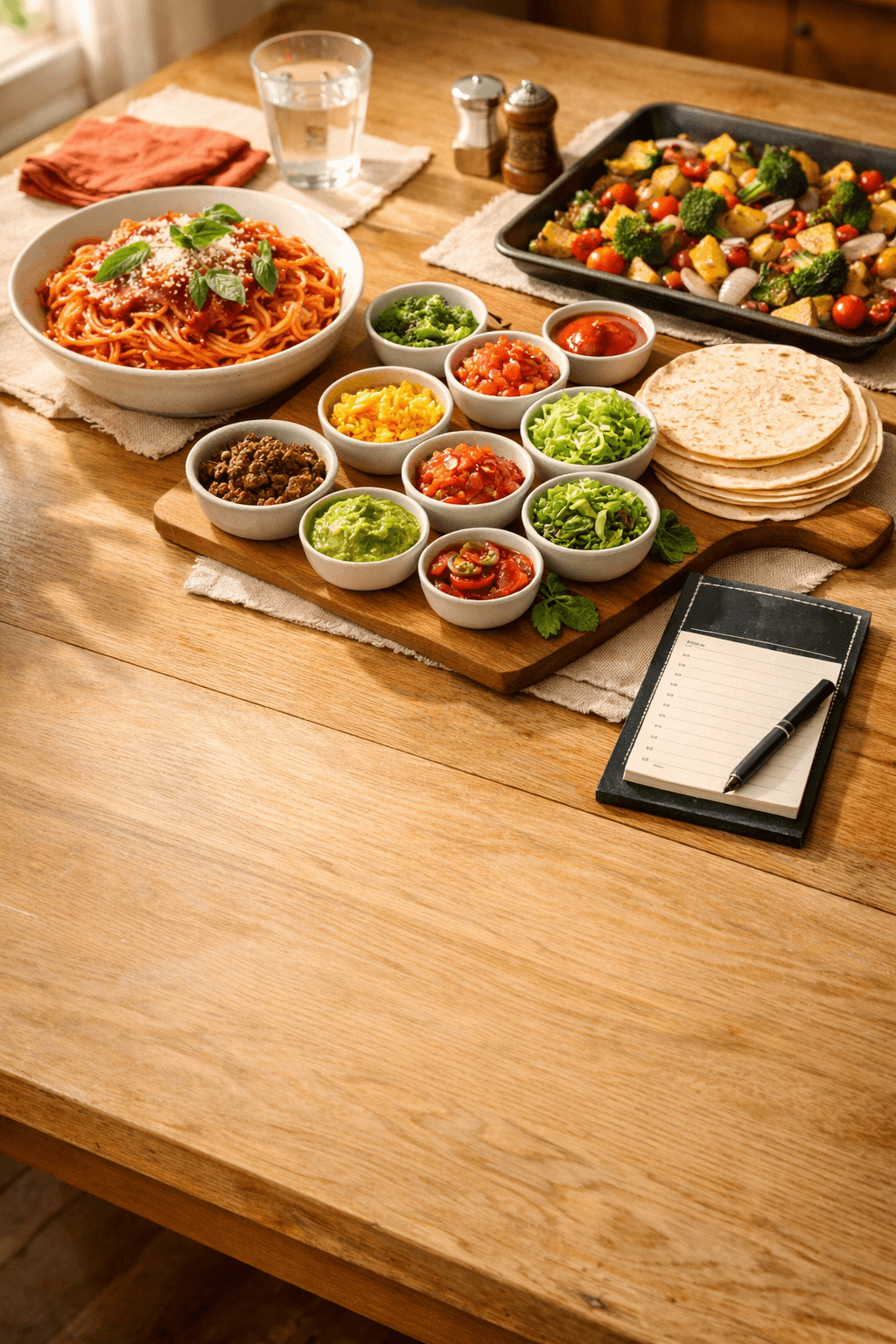
How to Stop Being the Only One Who Decides What's for Dinner
Tired of solo dinner decisions for a family that has opinions? Here's a practical system for getting everyone's input — without chaos or nightly arguments.

Meals for Picky Families: How to Get One Dinner Everyone Actually Eats
Tired of making three dinners a night? Here's a practical system for finding meals for picky families that gets everyone to the table without the argument.

HelloFresh Alternative: What to Do Instead for Weekly Family Dinners
Tired of meal kit boxes that don't fit your family? Here's the plan-based HelloFresh alternative that actually works for real family dinners.