
Family Friendly Meals Without the Two-Dinner Trap: A System That Actually Works
You planned a chicken stir-fry. Your 7-year-old announces she doesn't eat "mixed-up food." Your partner says "whatever you want" — which, as you know, means anything but what you just said. Forty-five minutes later, you've made the stir-fry, reheated leftover pasta for your daughter, and you're eating standing over the sink because you've lost the will to sit down.
If that sounds familiar, you're not dealing with a recipe problem. You're dealing with a negotiation problem — and it plays out at dinner tables across the country every single night. This guide isn't a list of kid-friendly dinner ideas to try. It's a system for ending the cycle entirely.
Why the Two-Dinner Trap Happens in the First Place
Here's the thing nobody says out loud: making two dinners isn't a failure of willpower. It's a completely rational response to a broken process.
The process goes like this. One person — usually the same person, every night — decides what's for dinner. They cook it. Someone at the table doesn't want it. Rather than deal with the meltdown, the argument, or the passive-aggressive silence, the cook makes something else. It's faster than fighting. It feels like the kind thing to do.
The problem is that it trains everyone in the household to opt out. Your 9-year-old learns that objecting works. Your partner learns that staying quiet gets them off the hook. And you learn that planning dinner is a solo burden with a guaranteed critic waiting at the end of it.
The meal itself was never really the issue. The issue is that nobody had any say in it before it hit the table.
What Most Families Try (And Why It Doesn't Stick)
The standard advice for picky eaters is to just "offer variety" and "keep trying new foods." That's fine developmental guidance for a 3-year-old. It doesn't help you on a Tuesday night after soccer practice when you have 28 minutes to get food on the table.
Other common approaches:
The compromise menu. You rotate through a set of "safe" meals everyone tolerates — spaghetti, tacos, rotisserie chicken from Costco. This works until it doesn't, usually around week three when everyone's bored and you're out of ideas.
The short-order solution. You just accept that you'll always make two things and try to find combinations that share ingredients. Efficient, maybe. Sustainable, no.
The "eat what I made" stance. Works for some families. Creates dinner-table standoffs in others. Your mileage will genuinely vary here, and how well it lands depends a lot on the ages and temperaments involved.
None of these address the root cause: people are reacting to a decision they had no part in making.
The Fix: Get Buy-In Before You Cook
The system that actually breaks the two-dinner cycle isn't about finding meals everyone magically loves. It's about involving people in the decision before the cooking starts — so that by the time food hits the table, the complaining window has already closed.
Here's how it works in practice:
Step 1: Generate options, not mandates. Instead of deciding what's for dinner and announcing it, put a small set of options on the table earlier in the week. Three to five choices is enough. "Here are the dinners I'm thinking for this week — do any of these not work for you?"
Step 2: Let people vote, not veto. There's a difference between asking "what do you want?" (opens a negotiation with no end) and "which of these works?" (closes it). The second question gives people agency without handing over the menu entirely.
Step 3: Lock it in. Once the week is set, it's set. "We already picked this together" is a completely different conversation than "I decided this for you." Kids especially respond differently when they remember voting for something.
Step 4: Build in one flex night. One night a week — Friday, usually — is the night with no plan. Leftovers, takeout, breakfast-for-dinner. That release valve matters. It keeps the structure from feeling suffocating.
What I've found works best is doing this at the start of the week, not the day of. When the decision is made Sunday afternoon, you're not negotiating under pressure. Nobody's hungry yet. Nobody's tired yet. It's a completely different conversation.
What This Looks Like in a Real Week
Say your household has one kid who won't touch anything spicy, a partner who's trying to eat more protein, and you — who just want to cook something that doesn't take an hour on a Wednesday.
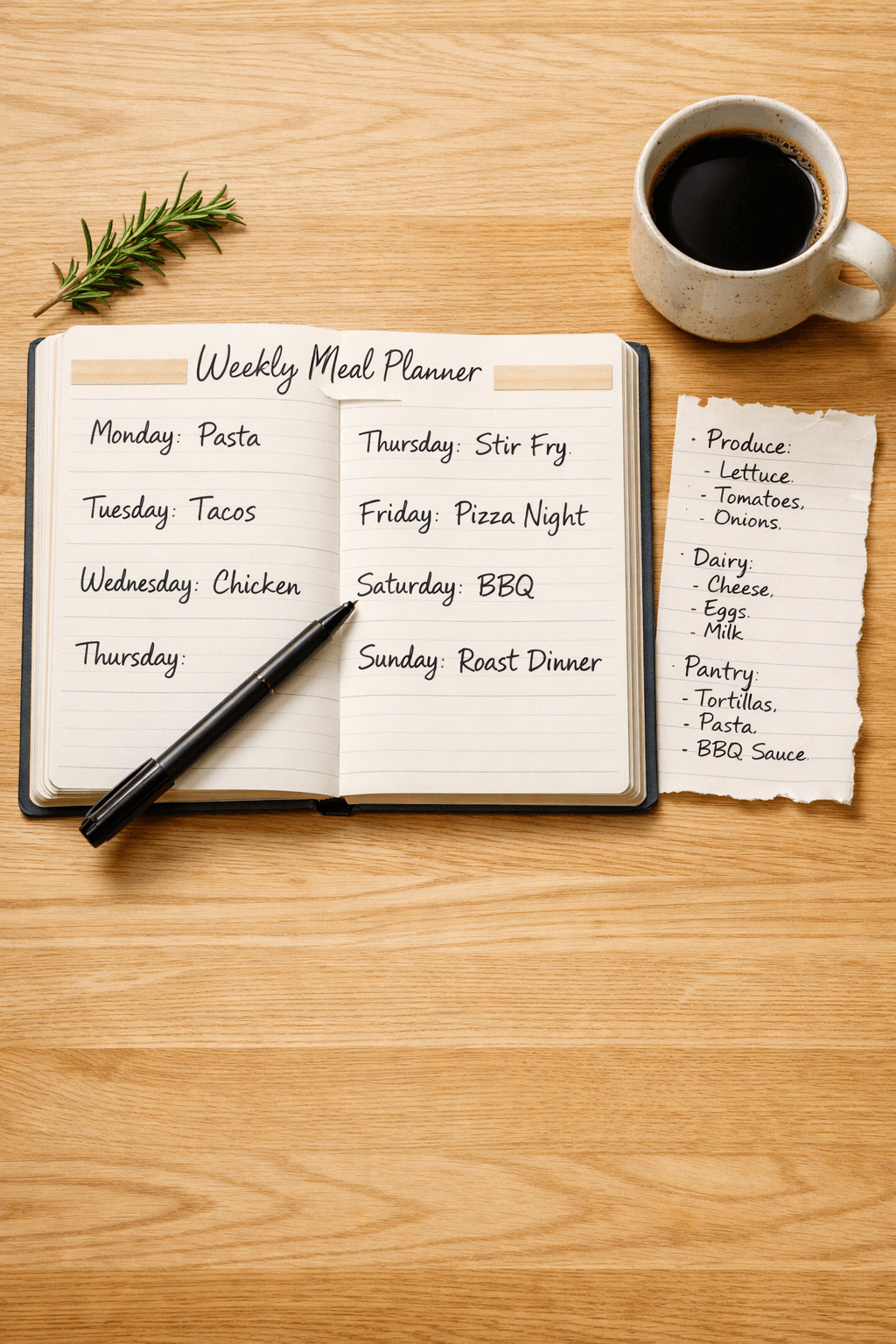
A week built around this system might look like:
- Monday: Sheet pan chicken thighs with roasted vegetables — protein-forward, nothing spicy, 35 minutes. Your 10-year-old helped pick it.
- Tuesday: Tacos with ground beef, plain for the kid, seasoned for the adults. Shared base, easy customization.
- Wednesday: Pasta with marinara. Fast, universally tolerated, no argument.
- Thursday: Salmon with rice and cucumbers. Your partner's pick. Your kid agreed to try it because she voted for Wednesday.
- Friday: Flex night. Frozen pizza and a salad. No one complains about frozen pizza.
This isn't a revolutionary dinner rotation. What's different is that everyone in the household looked at these options and said yes before Monday arrived. That changes the entire dynamic at the table.
When Your Family Is More Complicated Than That
This system doesn't solve everything, and I won't pretend it does.
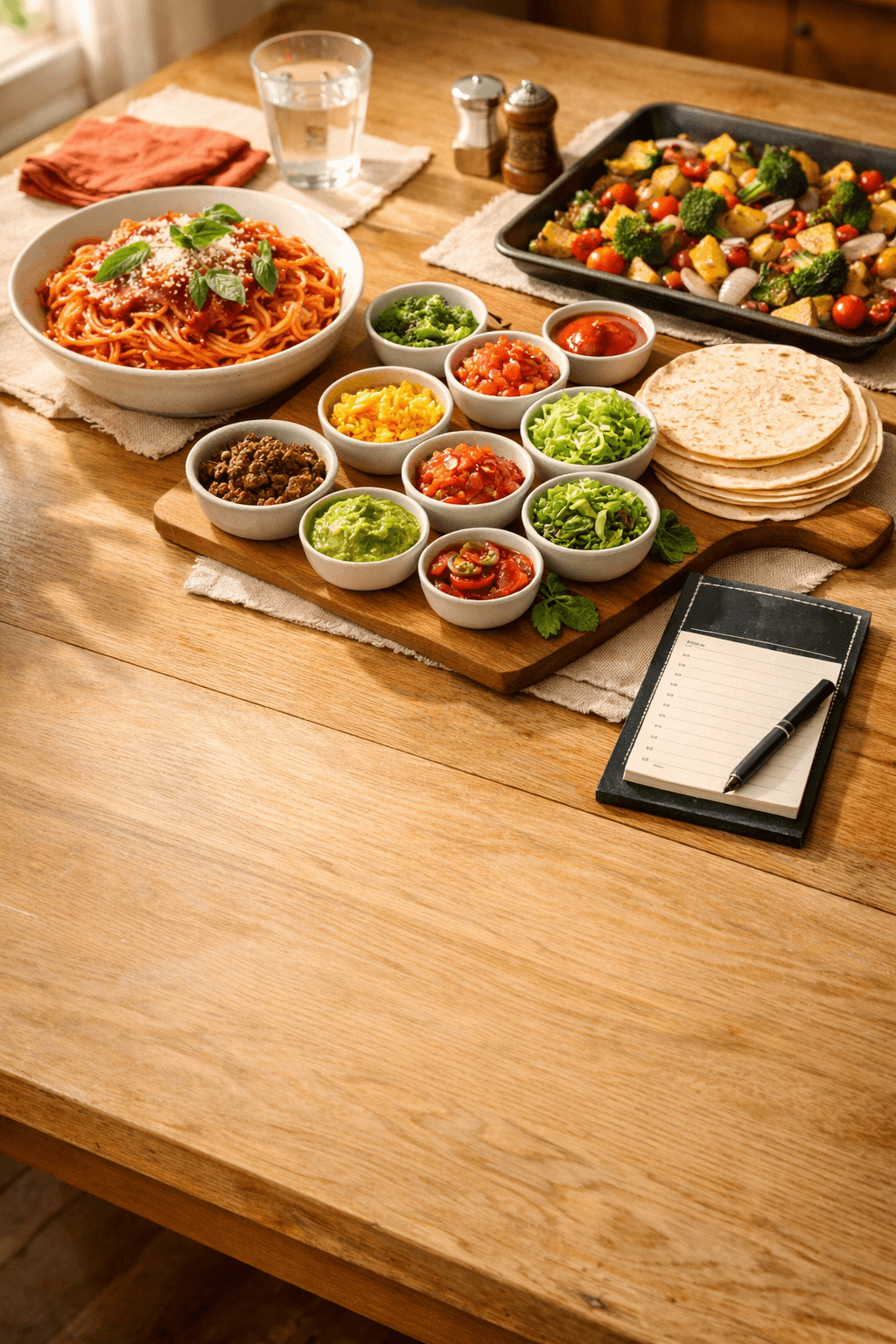
If you have a child with genuine sensory issues around food, the voting approach still helps, but you'll need more flexibility built into each meal — think "deconstructed" versions where components are served separately rather than combined. A taco night where the kid gets plain beef, plain cheese, and plain tortillas on separate parts of the plate isn't a second dinner. It's the same dinner, disassembled.
If you have real dietary splits — one person is gluten-free, another is vegetarian — the system still applies, but your pool of options needs to be built around those constraints first, not retrofitted around them. Start with what everyone can eat, then build outward.
The "I don't care" partner is a different problem. What I've found is that "I don't care" usually means "I don't want the responsibility of deciding, but I have opinions about the outcome." Giving them a small, specific set of options — not a blank canvas — usually draws out a real preference. "These three — which one?" works better than "what do you want this week?"
The goal isn't a perfect dinner every night. It's a household where one person isn't carrying the entire weight of feeding everyone, alone, with no input, every single day. That's the thing worth solving.
Slated: Your whole week of dinners, planned in minutes. Personalized meal plans, family voting, and one-tap Instacart ordering.
Try it free for 14 days
Get Slated for iOSNo credit card required
You might also like

HelloFresh Alternative: What to Do Instead for Weekly Family Dinners
Tired of meal kit boxes that don't fit your family? Here's the plan-based HelloFresh alternative that actually works for real family dinners.
Meals for Picky Families: How to Plan a Week of Dinners Everyone Will Actually Agree On
Tired of dinner arguments? Learn a practical system for planning family-friendly meals that picky eaters, divided tastes, and 'I don't care' partners will all accept.
How to Stop Being the Only One Who Decides What's for Dinner
Tired of solo dinner decisions for a family that has opinions? Here's a practical system for getting everyone's input — without chaos or nightly arguments.